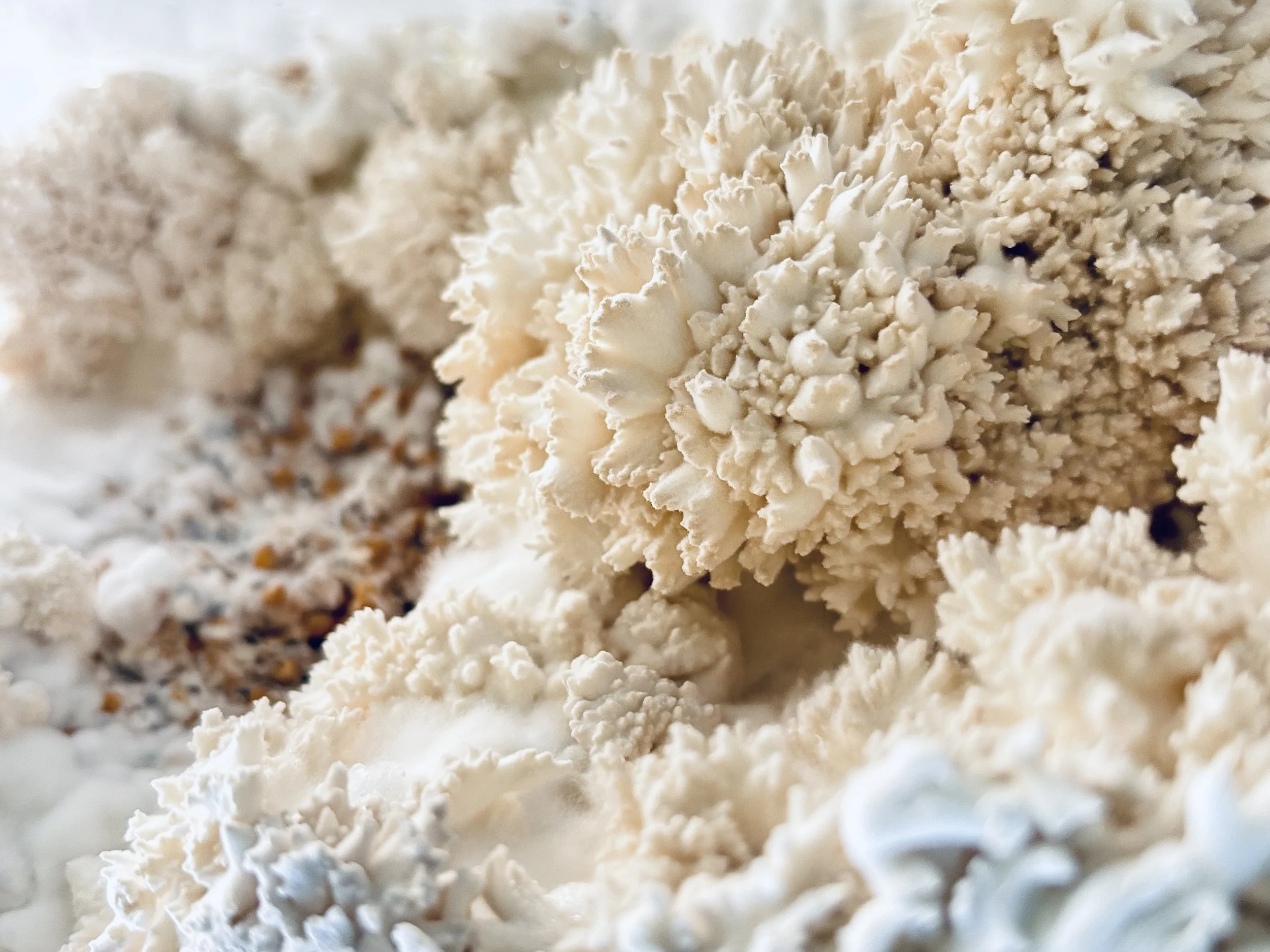
Mycelium-based materials in operating theatres
who
we are:
Collaborative research project:
Neurosurgery,
Textiles Design,
Material Design and Development (Ruta Vronevskyte),
Design Informatics,
Soft Robotics.
Initiated by a neurosurgeon from The Department for Neurosciences, University of Edinburgh, and funded by Edinburgh Innovations (The University of Edinburgh).
Led by a Edinburgh College of Art Design School in collaboration with the medical staff from the Department for Neurosciences.
Ruta was invited to join the project as an independent Sustainable and Regenerative Design Consultant and Researcher.
Image below: Fungi colonised silk chiffon, 3D shape achieved with mould. (Ruta Vronevskyte, 2024)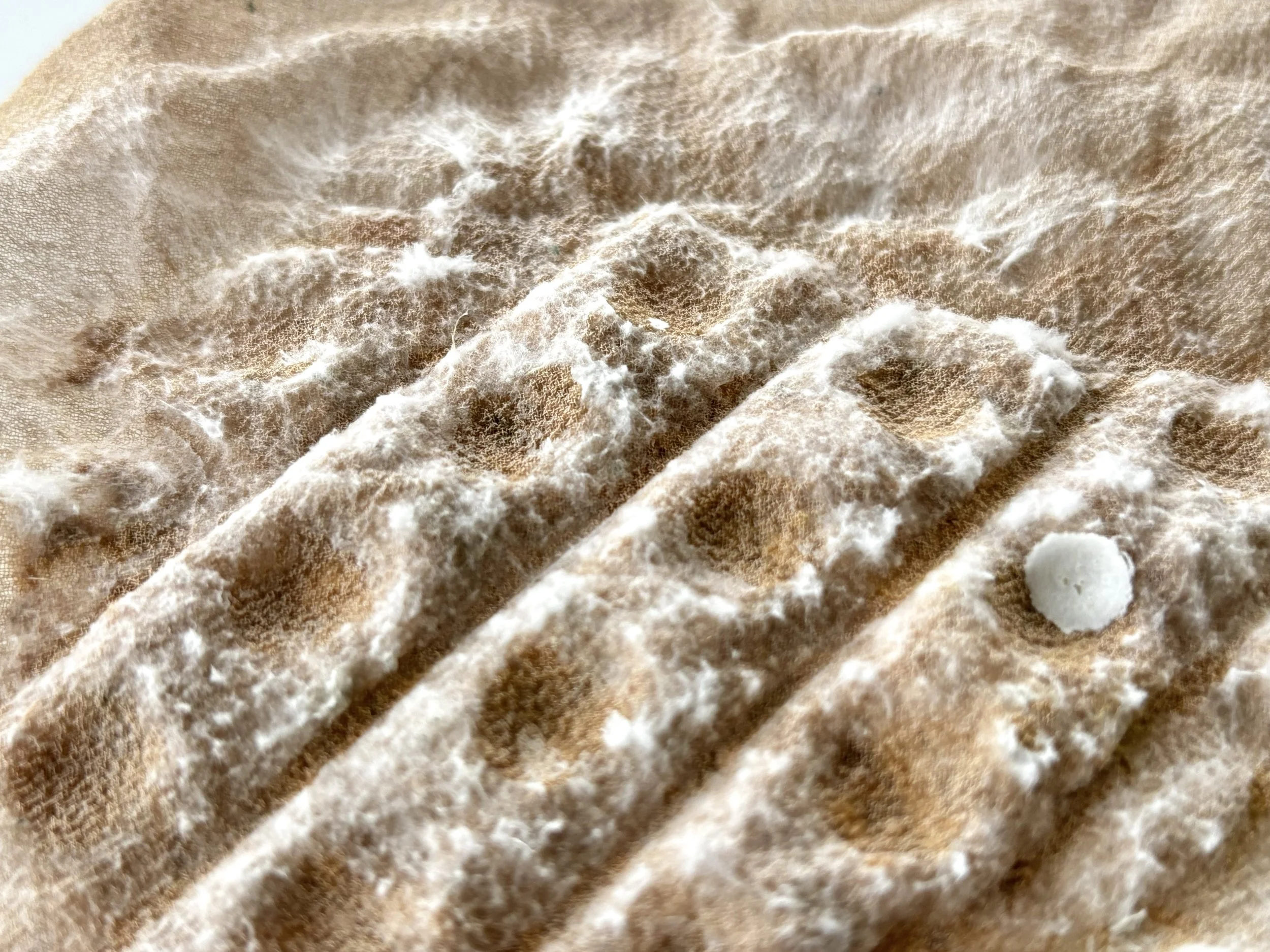
our story:
With finite resources and increasing rates of medical waste pollution, how might we re-think the design of materials used within the surgical operating theatre?
Is it possible to design wearable surgical instrument interfaces that support surgeons’ performance, thus improving patient outcomes?
This research group, where Ruta was leading the biomaterial research, focused on considering concurrently human and environmental aspects; applying person-cantered alongside post-human design methods. Exploring the relationship between the lived body and aesthetics for improved bodily perception and performance, while experimenting with the biodegradable behaviour of mycelium seeded textiles.
Image below: Mycelium print on wool. (Ruta Vronevskyte, 2024)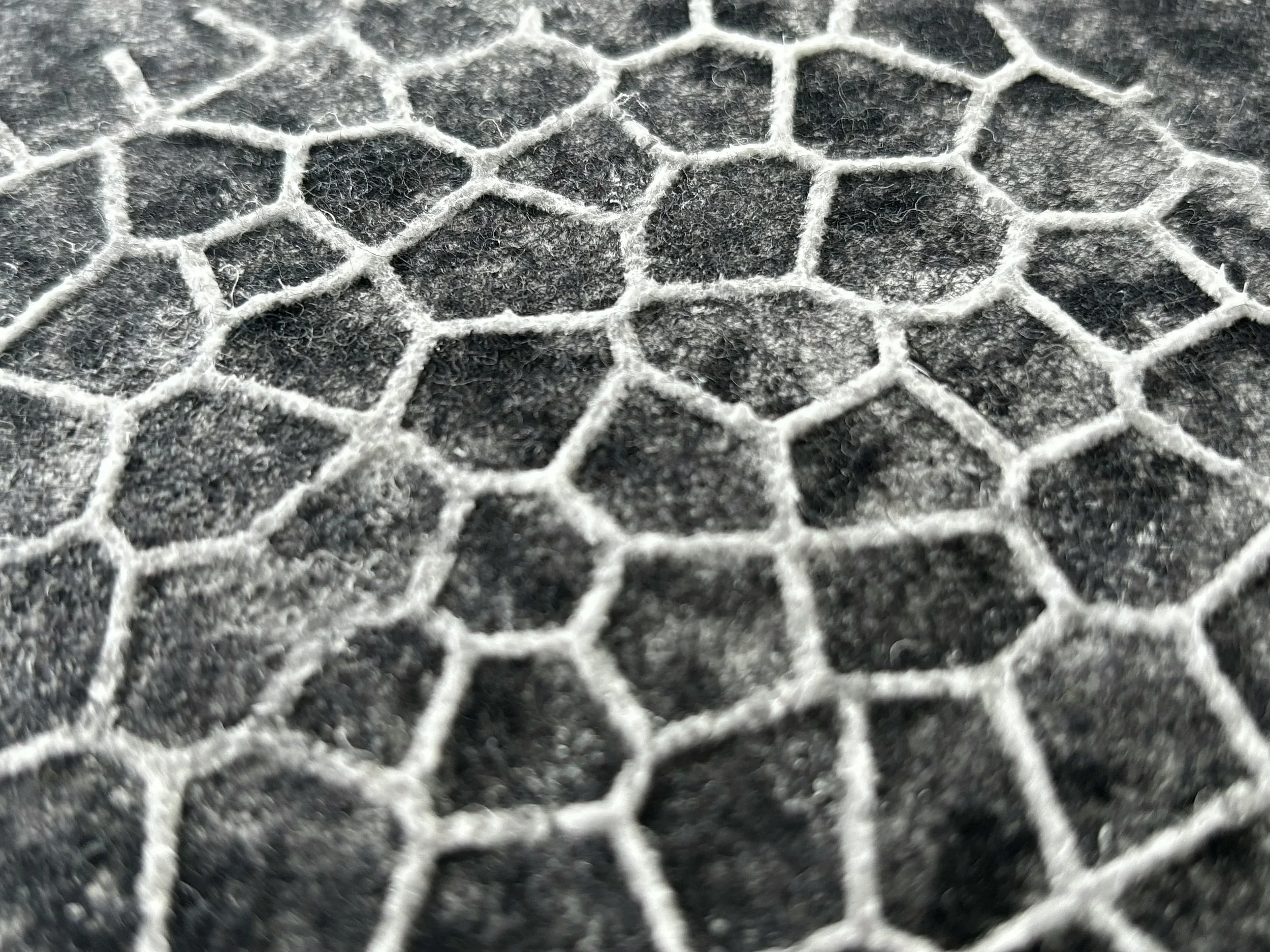
our
hypothesis:
Could fungi help increase the biodegradability of textiles in the right conditions and strategically colonised on fabric?
Could design thinking and material innovation help medical waste crisis and break the paradox of medical sector damaging planetary, therefore human health?
Mycelium is the root of fungi. It is fast growing, safe, inert, renewable, natural material that can nurture the cultivation of new materials at its end of life. Delivered from fungi, it recycles carbon and nitrogen, and other essential elements that feed the soil.
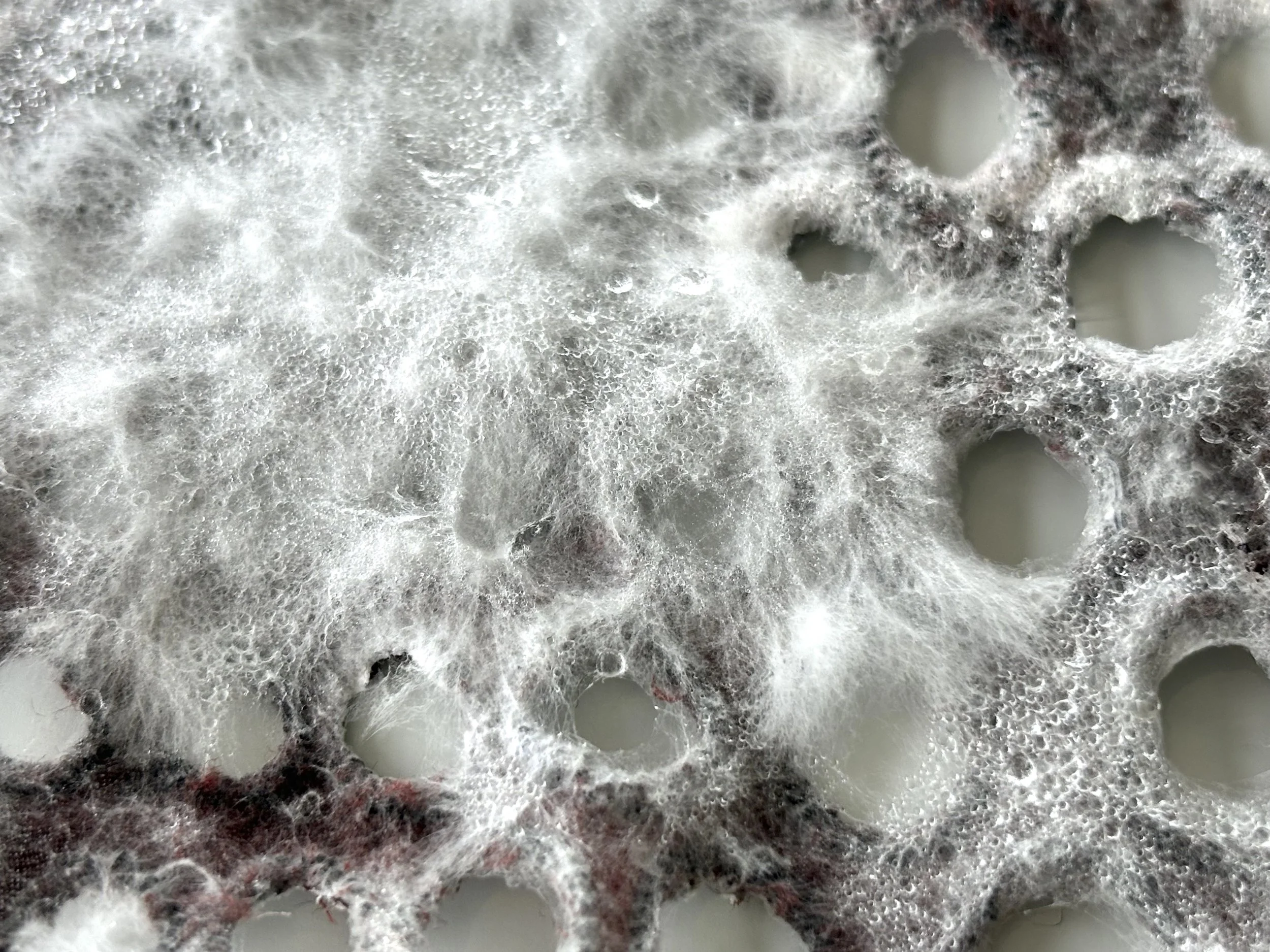
Image below: Fungal hyphae spreading on the surface of the fabric (Ruta Vronevskyte, 2025)what we
discovered:
The team experimented using different fabrics, processes and innovative textiles techniques, searching for candidate materials to produce a smart wearable that could incorporate both the mechanism of surgical switch and mycelium.
While researching mycelium and its grand ability to degrade different materials, the team was inspired to create closed loop recycling systems in hospitals, where materials strategically colonised by fungi could be recycled and degraded in situ.
The team discovered that fungi can degrade synthetic materials and even plastic. This inspired the research group to think beyond the innovation of the surgical switch.
They started imagining speculative futures where the operating theatre as a whole is derived from fungi. The ideas inspired to lead a project at the Edinburgh College of Art, where the team involved third year textiles students.
Ruta was invited to deliver the teaching.
Project resulted in an exhibition, Operation Biodegradable, that was a part of Edinburgh Science Festival 2025.
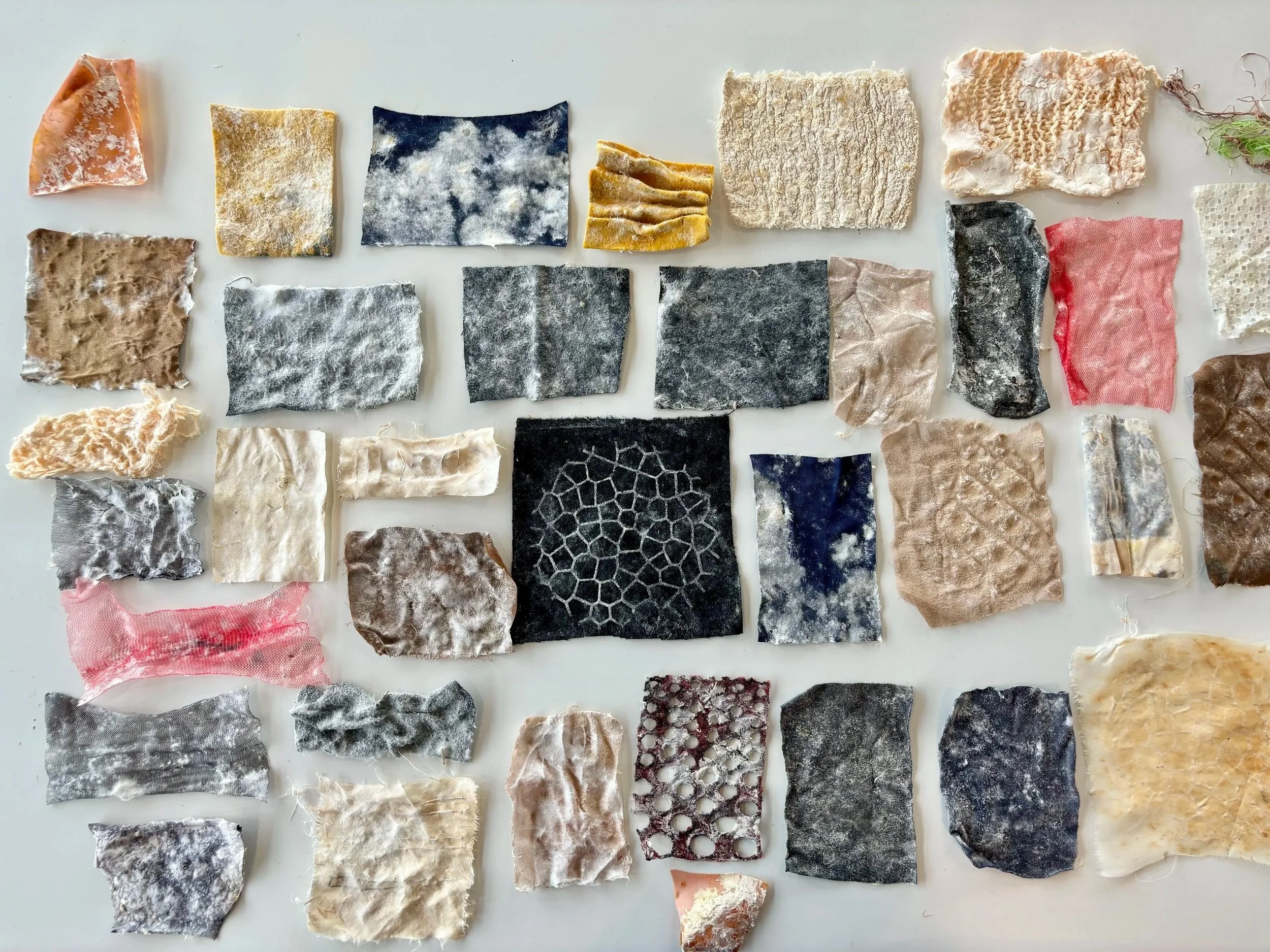
Image below: Searching for candidate materials: Different fabrics colonised by fungi (Ruta Vronevskyte, 2025)